
Why Coffee Isn't About Coffee
The first conversation is almost never about coffee.
Over the years I've worked with founders launching coffee brands across Saudi Arabia, the UAE, Qatar and beyond and one thing has always surprised me: not a single project began with a discussion about beans., nobody ever opened the meeting by saying: "Our roasting process is unique" or "Our Ethiopian beans are unlike anything else".
Instead, almost every conversation started with a feeling: "We want customers to feel like they're entering another world"
The coffee itself was always expected to be excellent, that wasn't the differentiator.
Coffee quality is no longer the story.
Twenty years ago, telling people you roasted carefully was a competitive advantage, although today it's expected. Founders understand that good coffee gets them into the market - brand experience is what keeps them there.
Coffee became culture.
This is especially visible in the Gulf: Saudi Arabia, the UAE and Qatar have become some of the fastest-growing specialty coffee markets, where independent cafés and local roasters continue to emerge alongside a deeply rooted coffee tradition. In these markets, cafés are as much about hospitality, social life and identity as they are about the beverage itself.
Some of the world's strongest coffee brands prove exactly this.
Look at Blue Bottle or % Arabica. Neither became globally recognizable because they claimed to have the world's best beans, but they created a recognizable philosophy, a visual language.
People remember how these brands make them feel long before they remember tasting notes. Blue Bottle itself describes its mission as creating intentional coffee experiences through hospitality, design and carefully crafted spaces, not simply serving coffee.
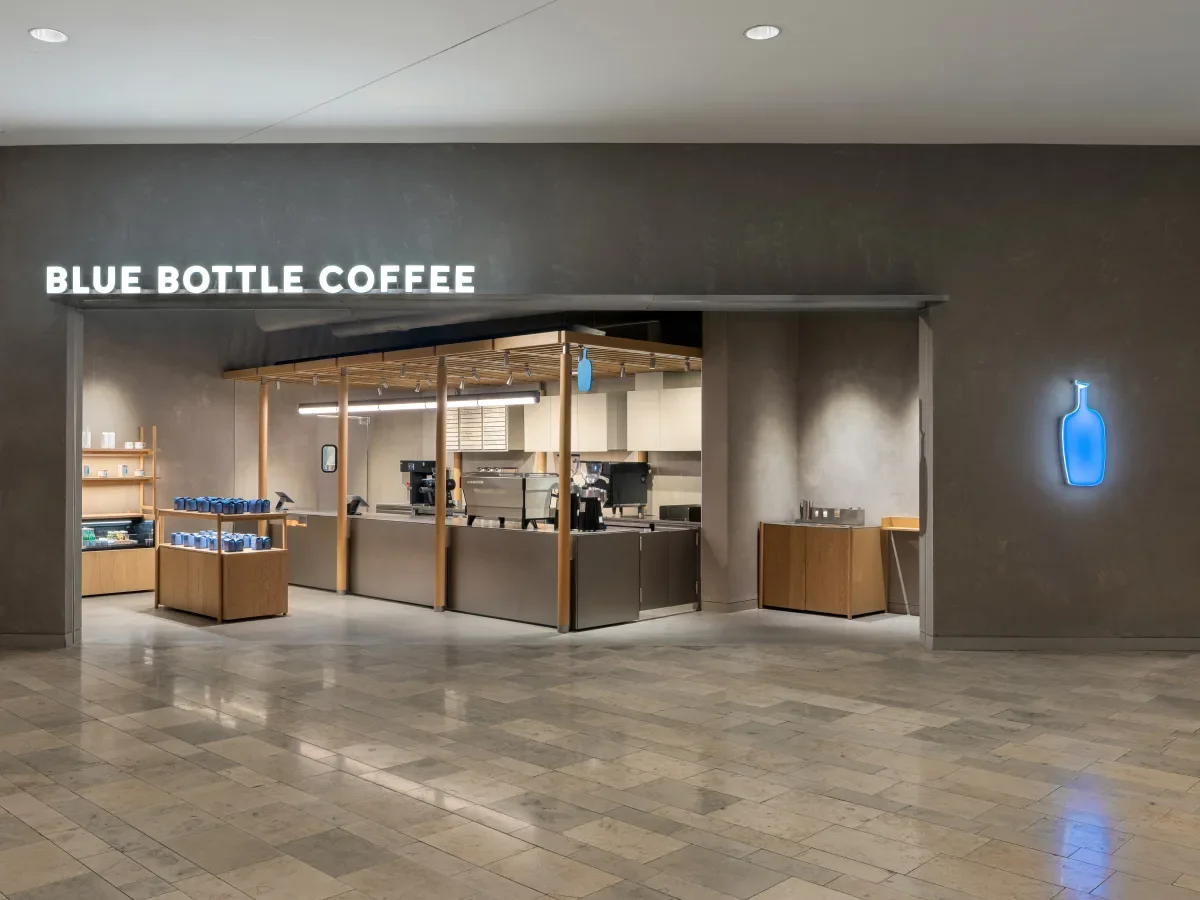
Blue Bottle (USA)
Blue Bottle started as a small roastery in Oakland in 2002. Fifteen years later, Nestlé acquired a majority stake in the company at a valuation of roughly $700 million. Today, the brand operates around 100 cafés across the U.S. and Asia, proving that a clear identity can travel far beyond the country where it was born.
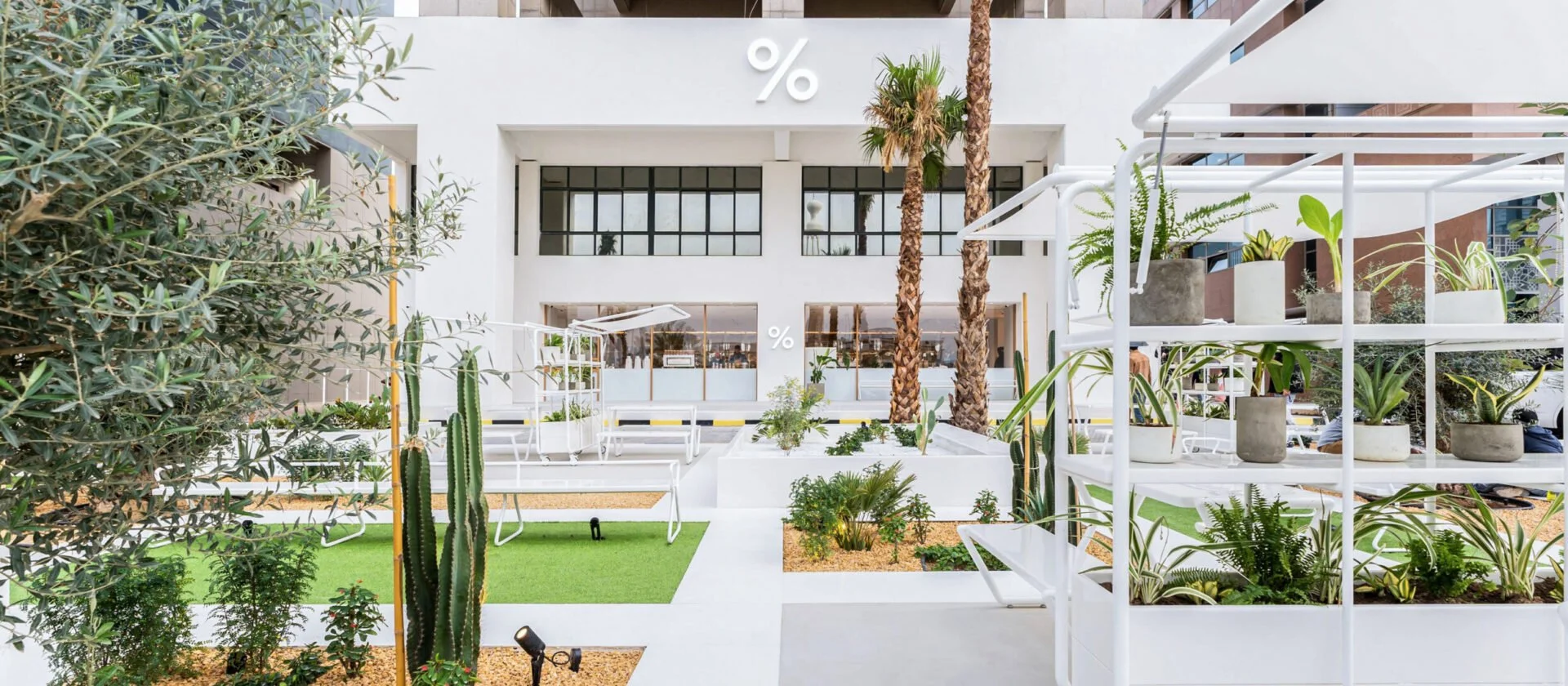
% Arabica (Kuwait)
% Arabica began in Kyoto, Japan, yet today it has grown into a global brand with more than 230 cafés across over 20 countries. Its success wasn't built on telling customers where the beans came from - it was built on a consistent visual language, minimalist architecture and an instantly recognizable experience that feels the same whether you're in Kyoto, Dubai or London.
The projects I've worked on followed exactly the same pattern.
Topia Coffee wasn't designed around coffee beans - it started with textures inspired by natural landscapes and tactile surfaces that could express calm and discovery.
Desert Coffee wasn't about deserts because the coffee came from one. The desert became a metaphor for heat, contrast and adventure. The packaging was designed to feel like an object discovered during travel rather than another coffee bag on the shelf.
And WALA Coffee may be the clearest example. The architecture, interior, packaging and identity all speak the same language.
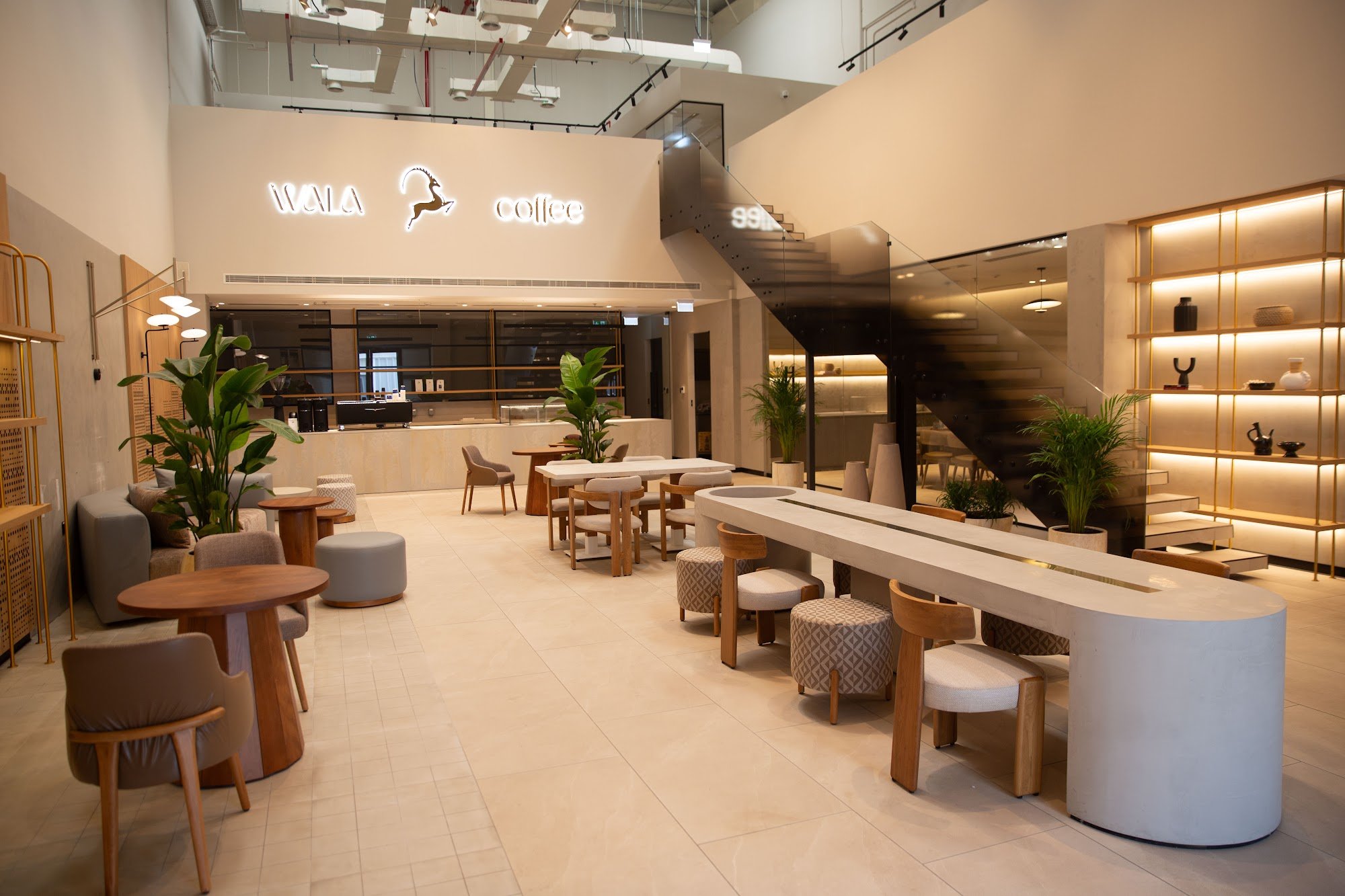
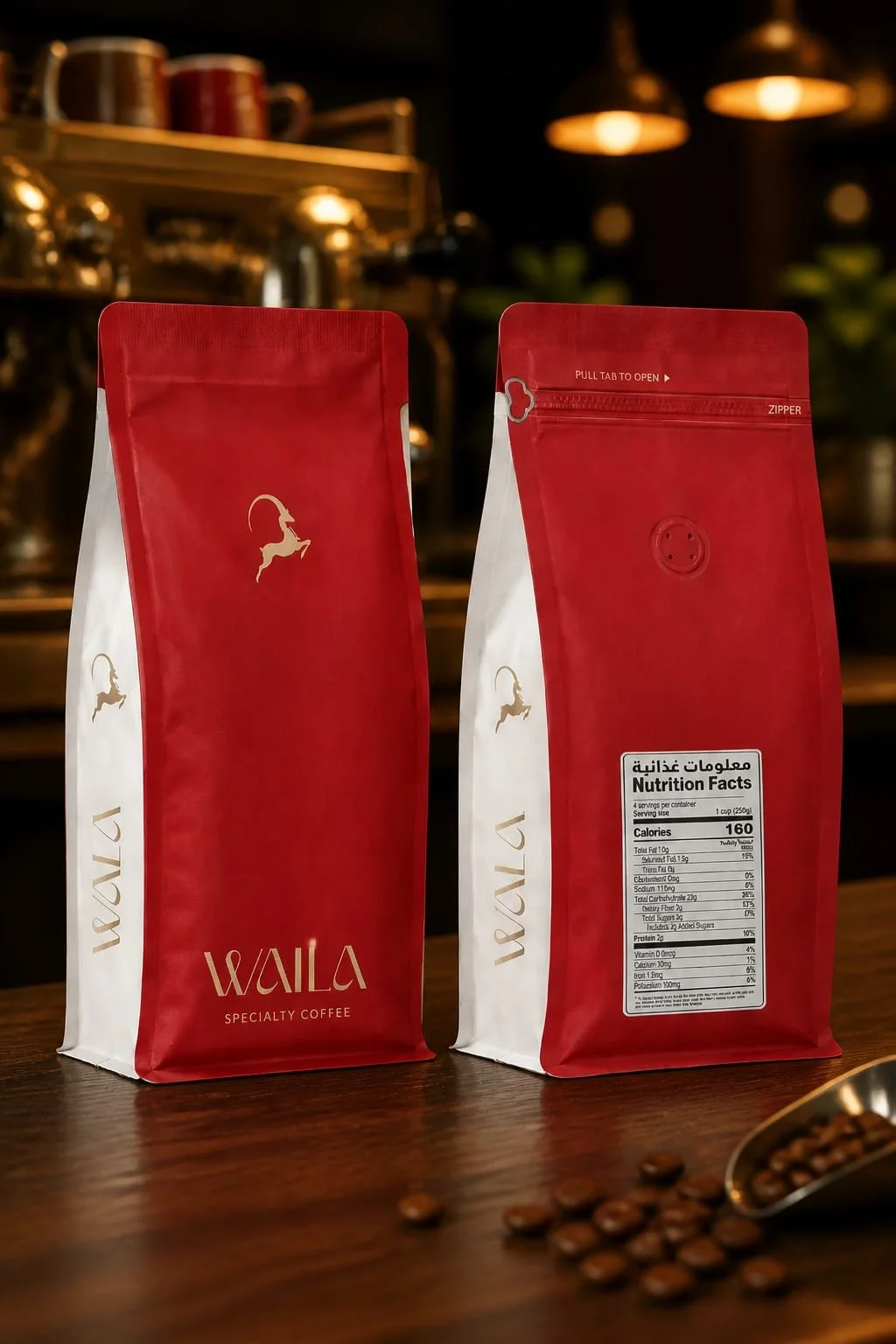
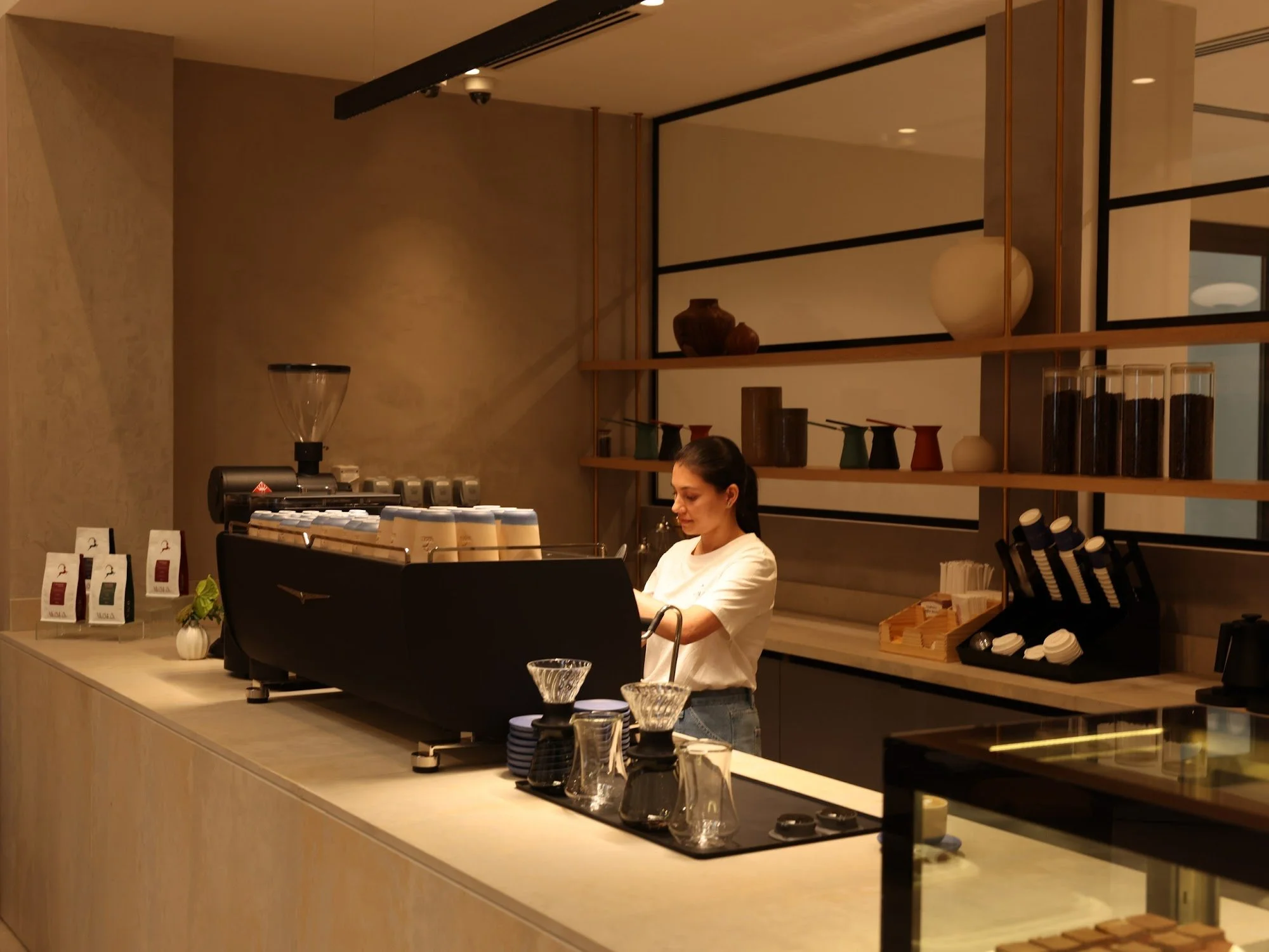
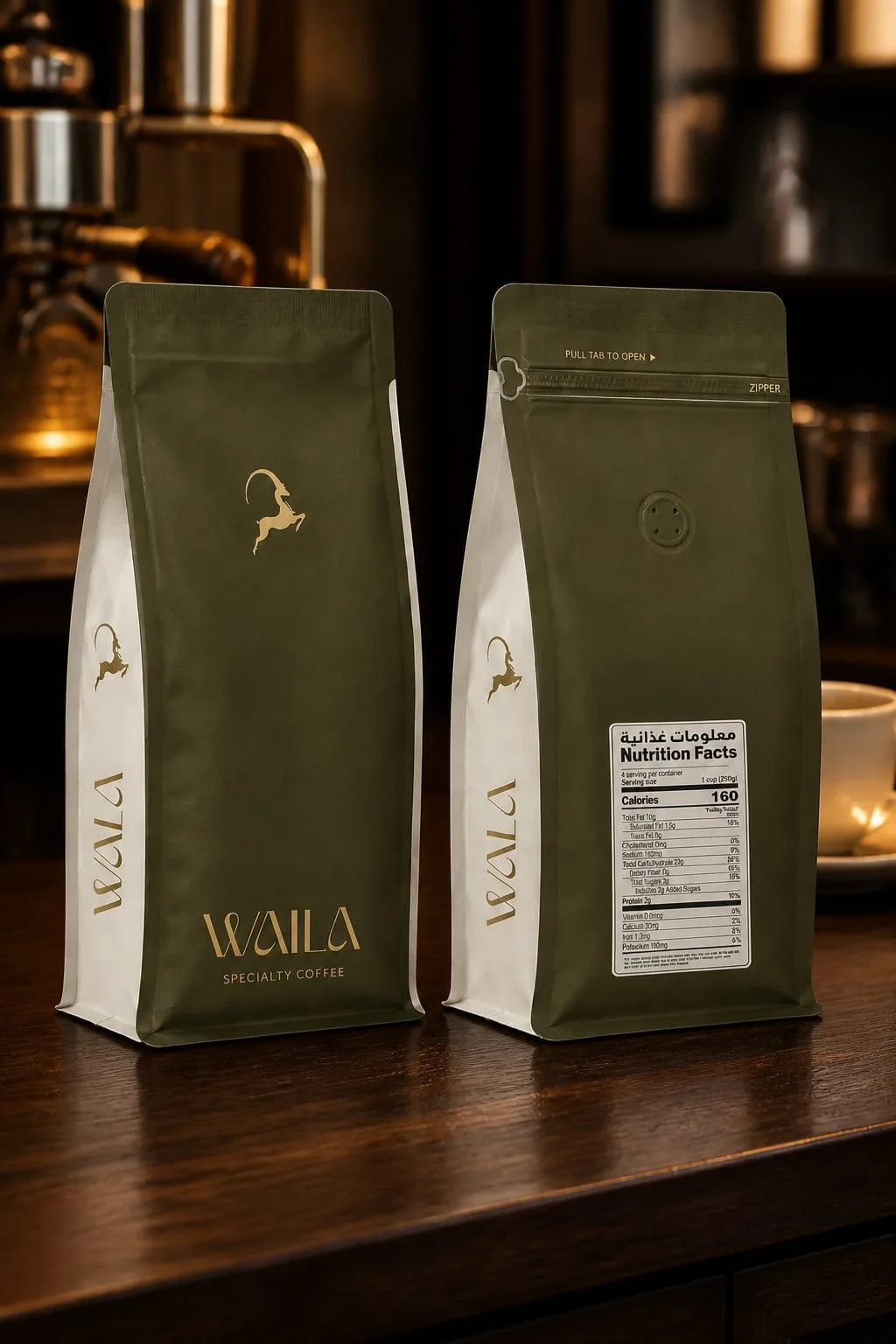
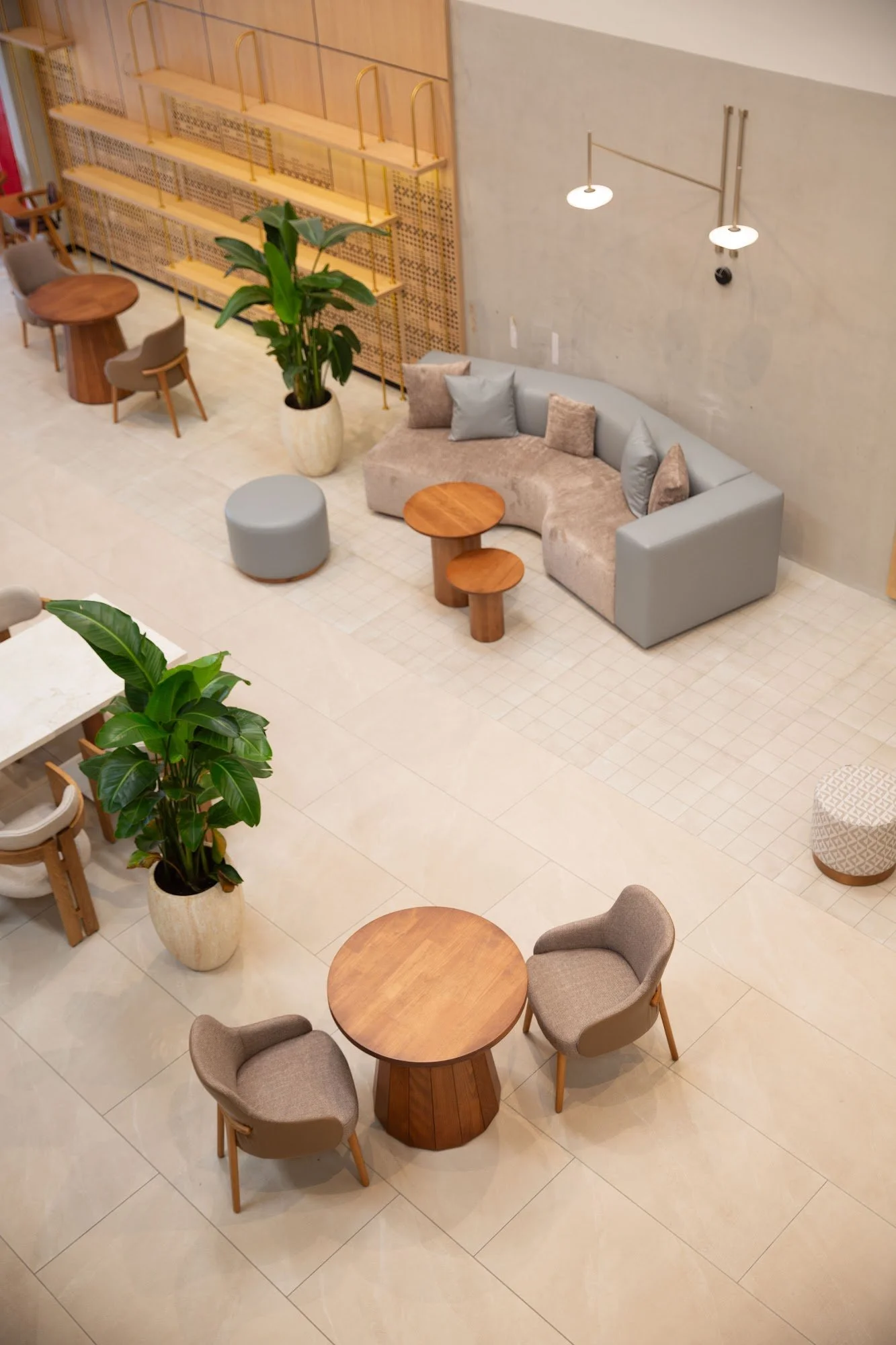
Minimal, quiet, confident. Everything is designed to slow people down and the coffee becomes part of a larger lifestyle rather than the main character.
That's why founders rarely ask for packaging.
They ask for a world, because once the coffee reaches a certain level (and most specialty brands already start there) the real competition shifts elsewhere. Not to better beans or another origin, but to a stronger emotional connection. That's why I rarely begin a coffee project by looking at coffee - I look at architecture, fashion, materials, sometimes nature.
Anything except coffee, because once every coffee brand starts looking at other coffee brands, they all begin to resemble each other.